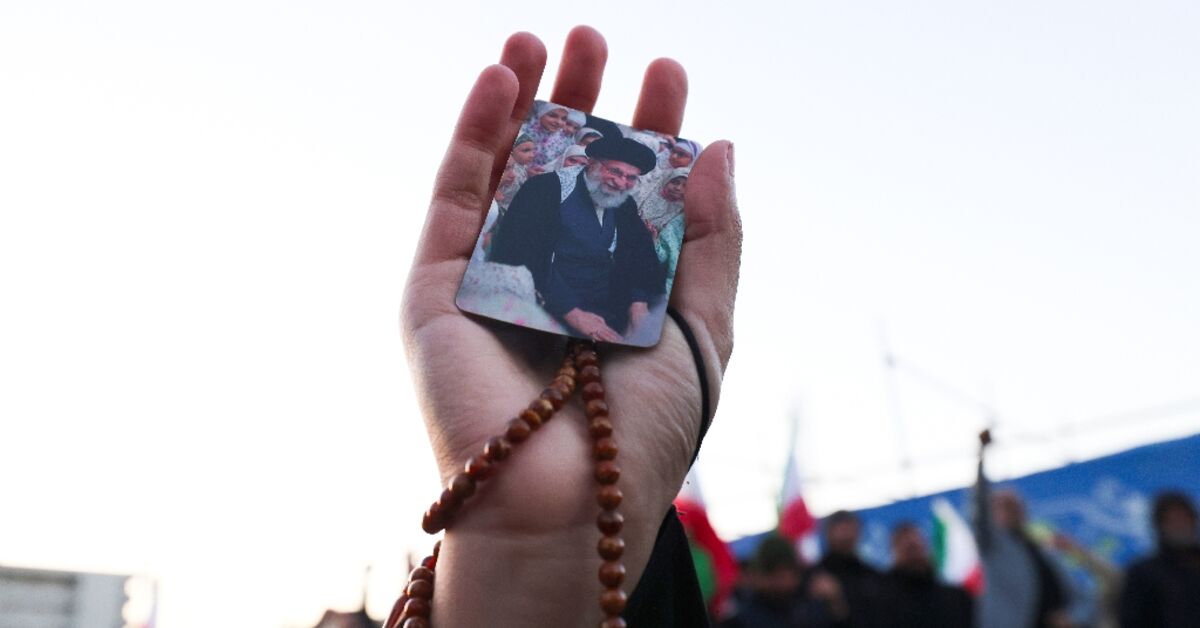
US-Israel Launch Unprecedented Strikes on Tehran: Supreme Leader Khamenei Killed
In a dramatic and unprecedented escalation of Middle East tensions, the United States and Israel launched a coordinated series of military strikes against targets in Tehran, Iran, on Saturday, February 28. These swift and powerful operations culminated in the death of Iran's long-serving Supreme Leader, Ayatollah Ali Khamenei, a development poised to reshape the geopolitical landscape of the region and beyond. The joint offensive followed weeks of heightened rhetoric and veiled threats of military intervention, marking a direct and audacious move by Washington and Jerusalem against the Islamic Republic.
The impact of these strikes, particularly the demise of a figure central to Iran's political and religious structure for over three decades, reverberated immediately across international capitals. As news broke, global markets reacted with volatility, and calls for de-escalation intensified, even as Iran promised and quickly delivered a robust response. The delicate balance of power in the Middle East, already fragile, has now been irrevocably altered, setting the stage for a period of profound uncertainty and potential further conflict.
The Coordinated Offensive on Tehran: A New Chapter in Regional Conflict
The joint military operation by the United States and Israel on Tehran represented a significant departure from previous, more circumspect engagements. While both nations have long expressed concerns over Iran's nuclear program, regional proxy activities, and support for various militant groups, a direct, joint attack on the Iranian capital itself had largely been considered a red line. This coordinated action indicates a strategic decision to confront what they deemed an escalating threat head-on, bypassing traditional diplomatic channels that had, for weeks, failed to de-escalate rising tensions.
Sources indicate the strikes were meticulously planned, targeting key command-and-control centers, military installations, and, crucially, leadership compounds within Tehran. The precision of the attacks suggests a high level of intelligence gathering and technological sophistication. This bold move underscores a strategic shift, demonstrating a willingness by the United States and Israel to take decisive military action against the heart of Iran's leadership, rather than solely focusing on its regional proxies or external nuclear facilities.
- Strategic Significance: Targeting the capital directly sends a clear message of resolve.
- Joint Nature: The cooperation between the US and Israel highlights a unified front against perceived Iranian aggression.
- Precedent Set: This operation establishes a new precedent for military intervention in the region, with potentially far-reaching consequences.
The Demise of Ali Khamenei: Iran's Succession Crisis and Future Direction
The most impactful outcome of the US-Israeli strikes was undoubtedly the killing of Ayatollah Ali Khamenei. Serving as Iran's Supreme Leader for 36 years, Khamenei was not merely a political figure; he was the spiritual and ideological lynchpin of the Islamic Republic, wielding ultimate authority over all state matters, including foreign policy, military, and the judiciary. His death leaves a monumental void at the pinnacle of Iran's power structure.
Khamenei's leadership ensured a certain degree of continuity and ideological consistency since the era of Ayatollah Ruhollah Khomeini. His departure ushers in an unpredictable succession crisis. The process of selecting a new Supreme Leader, typically handled by the Assembly of Experts, is now fraught with immense pressure and potential for internal power struggles. Analysts suggest several scenarios:
- Immediate Appointment: A swift decision to maintain stability, likely favoring a known hardline cleric.
- Interim Leadership: A temporary council or leader while the Assembly deliberates, potentially leading to factionalism.
- Reformist Shift (Less Likely): While unlikely in the current climate, a vacuum could theoretically open doors for different ideological currents, though the entrenched conservative establishment remains powerful.
The absence of Khamenei's guiding hand could lead to significant shifts in Iran's domestic and foreign policies. His successor will face the immediate challenge of responding to the US-Israeli strikes, managing internal dissent, and navigating a rapidly evolving regional landscape. This pivotal moment could either solidify the hardline clerical rule or expose deep fissures within the Islamic Republic.
Iran's Retaliation: Missiles Towards Israel and Gulf States
True to its warnings, Iran wasted no time in executing its promise of a "severe revenge." Hours after the strikes on Tehran and the confirmation of Khamenei's death, Iran launched multiple barrages of missiles. These retaliatory strikes were primarily aimed at Israel, targeting both military installations and civilian areas, as well as several countries in the Gulf region that host significant American military bases. Countries like the United Arab Emirates, Qatar, Bahrain, and Kuwait found themselves on the receiving end of Iranian projectiles, highlighting the widespread nature of Iran's immediate response and its capacity to project power regionally.
The precision and scale of Iran's missile attacks underscore its determination to demonstrate strength and deterrence, even in the face of such a profound loss. This retaliatory action confirms the immediate danger of a full-blown regional conflict, compelling the international community to redouble efforts for de-escalation. The targeting of Gulf states with US military presence also raises the stakes significantly, placing American personnel and assets directly in the line of fire and compelling a potential counter-response from Washington.
Understanding the nature of this retaliation is crucial: it’s not merely an act of vengeance but a strategic move to affirm Iran's continued defiance and capability. The trajectory of this conflict will heavily depend on the subsequent responses from the United States and Israel, as well as the diplomatic overtures (or lack thereof) from other major global powers.
Geopolitical Fallout and the Path Forward for the Middle East
The events of February 28th have thrust the Middle East into an unprecedented era of uncertainty. The direct military engagement involving Tehran, the United States, and Israel, coupled with Iran's direct retaliation, has implications that extend far beyond the immediate belligerents.
- Regional Alliances: Gulf states, already wary of Iran, may further solidify alliances with the US and Israel, potentially exacerbating regional divisions.
- Global Energy Markets: Any prolonged instability in the Gulf region, a major oil-producing area, will inevitably lead to spikes in global oil prices and economic disruption.
- International Diplomacy: The international community faces the daunting task of preventing a wider conflict. Diplomatic efforts will focus on ceasefires, de-escalation, and potentially renewed negotiations, though the current climate makes such efforts incredibly challenging.
- Internal Dynamics in Iran: The post-Khamenei era will be defined by how Iran manages its internal political landscape while facing intense external pressure. This period could see a strengthening of the Islamic Revolutionary Guard Corps (IRGC) or, conversely, a push for greater decentralization of power.
For individuals and businesses with interests in the region, staying informed and understanding the evolving dynamics is paramount. Fact: Regional stability directly correlates with global economic health. This event underscores the interconnectedness of international security and global markets. Analysts recommend closely monitoring official statements from all involved parties, the actions of international bodies like the UN, and shifts in global economic indicators to gauge the trajectory of this crisis. It is a time for cautious observation and strategic planning.
The killing of Ayatollah Ali Khamenei through joint US-Israeli strikes on Tehran marks a watershed moment in Middle Eastern history. Iran's immediate and widespread missile retaliation against Israel and US bases in the Gulf has transformed a long-simmering rivalry into open conflict. The implications for regional stability, international relations, and global economic markets are profound and far-reaching. As the world watches, the next steps taken by the United States, Israel, and Iran will determine whether this unprecedented escalation leads to a wider regional war or eventually paves the way for a new, albeit fragile, equilibrium.